

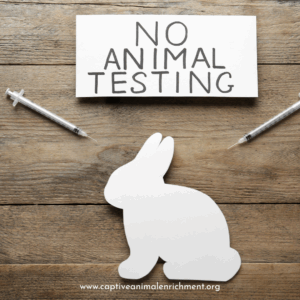
For way too long animal testing has been a cornerstone of scientific research, particularly in cosmetics and medical fields. Over a hundred million mice, rabbits, primates, and other animals are subjected to experiments annually, often under the unrealistic assumption that their responses mirror human outcomes. This practice, rooted in outdated science and a total absence of ethics, is increasingly irrelevant. Vivisection, the (usually totally unmedicated) dissection of living animals, exemplifies the extreme measures taken, raising profound moral questions. Meanwhile innovations like L’Oréal’s lab-grown human skin, EpiSkin, demonstrate that ethical, relevant and scientifically superior alternatives exist.
The Flaws of Animal Testing
Thankfully the scientific validity of animal testing is crumbling under scrutiny. Biological differences between animals and humans often render results unreliable, and hence meaningless. A 2004 study by Pound et al. in the British Medical Journal (BMJ) found that “if research conducted on animals continues to be unable to reasonably predict what can be expected in humans, the public’s continuing endorsement… seems misplaced”. PETA (People for the Ethical Treatment of Animals) reports that over 110 million animals are killed in U.S. laboratories annually, yet 95% of drugs deemed safe and effective in animal tests fail in human clinical trials. These failures stem from physiological disparities—animals metabolize substances differently, and (we should have guessed it) their genetic makeup diverges significantly from humans (Akhtar, 2015).
Vivisection, though less common today, highlights the ethical quagmire. If you can imagine it, historically this involved dissecting live animals to study their functions. While modern laws regulate such practices, vivisection’s legacy persists in experiments causing pain or distress. Investigations have revealed animals enduring burns, poisoning, or isolation, often without the ‘privilege’ of anaesthesia.
Add to this the fact that less than FIVE PERCENT of pharmaceuticals tested on animals even make it into the market. All that suffering for literally almost nothing.
The ethical issue isn’t just cruelty but the assumption that animal suffering is justifiable for human gain. Scientific publications provide a humane voice and argue that these differences make animal data a poor proxy for human outcomes, questioning the necessity of such practices… which honestly we should all be doing…
A Mad Norm
Why does animal testing persist despite its brutality and pointlessness? We think that regulatory inertia plays a significant role. In countries like China, animal testing is legally required for certain cosmetics, forcing companies like L’Oréal to comply despite their global cessation of these practices more than thirty years ago! Economic interests also perpetuate the norm with animal testing entrenched in institutional protocols, and transitioning to alternatives requires investment. We think that this is just another aspect of an ideology that some people have normalised: speciesism – the belief that human interests inherently outweigh those of other species. We view this perspective akin to racism or sexism, and we believe that animals’ capacity to suffer demands equal consideration… and quickly before we numb out to consistent systemic cruelty and lose the very humanity that makes us human.
The ethical contradiction is stark. Those who perform tests on animals claim they are similar enough to humans to give us relevant data but different enough to justify harm. Public perception is shifting though, thankfully, as surveys in the UK show growing opposition to animal testing, particularly for cosmetics, with most people favouring alternatives whenever they are available. Persistent animal testing, then, is not so much about scientific necessity and probably more about resistance to change, and these days the practice is clashing with our modern ethical and scientific standards.
L’Oréal’s EpiSkin and the Rise of Lab-Grown Skin
L’Oréal has been a pioneer in dismantling this norm. Since 1979, the company has developed EpiSkin, a reconstructed human skin model grown from human cells, often sourced from surgical waste – genius! EpiSkin mimics human skin’s histological structure, allowing researchers to test for irritation, corrosion, or absorption without harming animals. By 1989, L’Oréal stopped testing products on animals… 14 years before EU regulations mandated it! Today, their EpiSkin centers in France, China, and Brazil produce these models, which are up to 86% accurate in predicting human skin reactions… I mean really, if they can do it, anyone can!
EpiSkin’s competitor, EpiDerm, developed by MatTek, follows a similar approach, producing enough skin weekly to cover two adult humans. These lab-grown models are not only ethical in that they eliminate animal suffering, but they’re also scientifically superior because they directly reflect human biology. L’Oréal’s commitment extends beyond EpiSkin; they employ molecular modeling, imaging, and expert toxicology systems, and advocate for regulatory acceptance of non-animal methods globally, particularly in China. Their work shows that ethical testing can align with business interests, offering a PR boost alongside scientific progress.

Broader Alternatives to Animal Testing
Beyond lab-grown skin, a suite of alternatives is transforming testing. In vitro methods, like 3D human cell structures, replicate human tissues with high fidelity. For example, cornea-like 3D models from human cells are used for eye irritation testing, outperforming animal-based methods. In silico approaches, such as computational models, predict toxicity with 80–95% accuracy, rivaling or surpassing animal tests. Human volunteer studies, using donated tissues or non-invasive techniques, provide direct insights into human responses, unhindered by species differences.
PETA’s Research Modernization Deal outlines a roadmap to phase out animal testing, emphasizing these human-relevant methods. Their Science Consortium collaborates with industry to promote non-animal testing, donating millions to advance alternatives. The 3Rs principle – replacement, reduction, refinement—guides these efforts. Replacement involves using lower vertebrates like zebrafish or invertebrates, which raise fewer ethical concerns. reduction and refinement minimise animal use and suffering, but replacement is the ultimate goal, aligning with ethical science.
These alternatives are often faster and cheaper. PETA notes that non-animal methods, like reconstituted human skin tests, take less time and money than animal experiments, which can be protracted and costly. The economic and ethical drivers, coupled with public demand for cruelty-free products, are accelerating this shift, as seen in the growing popularity of certifications like the Leaping Bunny logo.
The Path Forward and CAEP’s Vision
The evidence is clear: animal testing is outdated, kept alive by unconscious habit rather than necessity. Innovations like EpiSkin, alongside in vitro and in silico methods, offer ethical and scientifically proven superior alternatives. The madness of normalising animal suffering, whether through vivisection or less invasive tests, clashes with modern human values of compassion and precision. As public support wanes and science advances, the transition to non-animal testing is not just possible but imperative.
The Captive Animal Enrichment Project (CAEP) promotes the ethical and respectful treatment of captive animals through enrichment programs, education, and advocacy. By ensuring animals live dignified, stimulating lives, CAEP rejects the exploitation inherent in animal testing. Our principles, prioritising animal wellbeing over human convenience, offer a model for a world where science serves humanity without harming sentient beings. This should be the baseline for all testing, guiding regulators, companies, and consumers toward alternatives. CAEP’s vision calls for a future where no animal suffers for human progress, a goal within reach if we all act within our means.

Join us in caring for the little things:
- Beauty Without Cruelty in South Africa provides a comprehensive humane guide which lists all endorsed cruelty-free products, or look for the bunny symbol on the back of the packaging…
- Reduce your consumption of meat – this has the greatest impact on mitigating cruelty to animals since farmed animals suffer some of the worst living (and dying) conditions.
- SAY SOMETHING! Is your bestie a little heavy on punishment for her dog? Is your neighbour keeping animals inappropriately? Does your mom buy roast battery chickens from Woolworths instead of free-range? Speak up. Remember they don’t have voices.
- Adopt, don’t shop! Animal rescue centers are FULL of homeless dogs, and often have many purebred dogs, if that is what you feel you need. It is cheaper and more ethical to adopt, such an easy win!
- Support animal welfare organisations – they are all over the place, and guess what? We are one of them!


